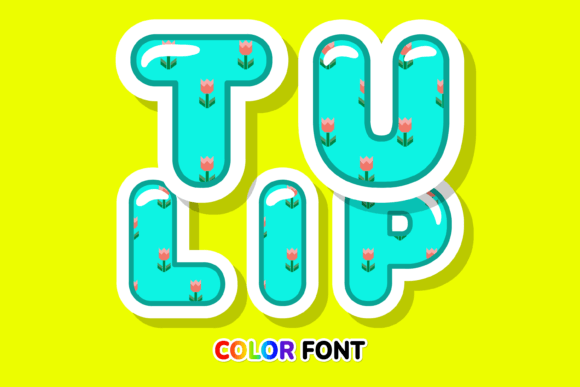
Tulip: A Color Font for Modern Design
Imagine a typeface that doesn't just convey words but blooms with the vibrant, layered beauty of a garden in spring. Tulip is that font—a striking color font crafted in the unmistakable style of tulip petals, offering designers an immediate injection of organic elegance and visual interest. This Opentype-SVG asset is engineered for projects that demand a lovely, high-impact touch, moving beyond standard monochrome typography to deliver a full-spectrum experience.
The Power of Color Fonts in Visual Communication
In today's saturated digital landscape, capturing attention requires more than clean lines; it demands strategic use of color and form. Tulip answers this call by integrating a complex color palette directly into its letterforms. This eliminates the need for manual layering or post-processing, streamlining the design workflow for creators. For graphic design professionals, this represents a significant efficiency gain, allowing for the rapid creation of complex visual hierarchies where typography itself becomes the primary decorative element.
Practical Applications for Creative Projects
The versatility of a font like Tulip extends across numerous disciplines, enhancing both digital and physical outputs. Its rich, textured appearance makes it particularly effective where visual impact is paramount.
- Branding and Logo Design: Use Tulip to create memorable wordmarks for lifestyle brands, florists, artisanal products, or beauty companies. It instantly communicates a brand identity rooted in nature, care, and aesthetic detail.
- Social Media Graphics: In the fast-scroll of feeds on Instagram or Pinterest, Tulip’s inherent color and style stop the thumb. It is perfect for quote graphics, announcement posts, or story headers that need to feel premium and engaging.
- Packaging Design: For product labels, hang tags, or cosmetic packaging, this font adds a tactile quality that suggests luxury and craftsmanship, aligning with modern design trends that favor botanical and organic motifs.
- Editorial and Web Design: While primarily a display font, Tulip can serve as a powerful accent in magazine layouts, hero banners, or UI design for special event invitations, adding a focal point that guides the user’s eye.
Integrating Tulip into Your Design System
Successful visual design relies on the harmonious interplay of elements. When incorporating a distinctive asset like Tulip, consider its relationship with your existing color palette and supporting typefaces. Because Tulip carries significant visual weight, it pairs best with clean, neutral sans-serif fonts for body text to maintain readability and balance.
Evaluating its use also involves understanding technical compatibility. As a color font (Opentype-SVG), Tulip renders beautifully in modern design software including Adobe Photoshop, Illustrator, and Silhouette. However, designers must note its specific file requirements; the OTF and TTF files are optimized for these environments and are not compatible with Cricut machines. This distinction is crucial for print design and merchandise production to ensure the final output matches the digital preview.
Choosing the Right Asset for the Job
When selecting creative assets, the goal is always to enhance communication without compromising clarity. Tulip excels in scenarios where the typography needs to do double duty—acting as both a textual element and an illustrative one. It is an ideal choice for:
- Seasonal Campaigns: Spring sales, wedding invitations, or garden party promotions.
- Digital Products: Enhancing the cover art of e-books, planners, or creative templates.
- Merchandise: Designing apparel, tote bags, or stationery where a floral aesthetic drives the brand identity.
Ultimately, the strength of any design project